

Three Different Products, One Common Framework
Observations, reanalysis, and numerical weather prediction are three interconnected but distinct components of the atmospheric information system. This guide explains how observations are collected and used, how reanalysis reconstructs the past, and how numerical weather prediction projects the future, with an overview of the main observing systems, global reanalyses, and operational forecasting systems.
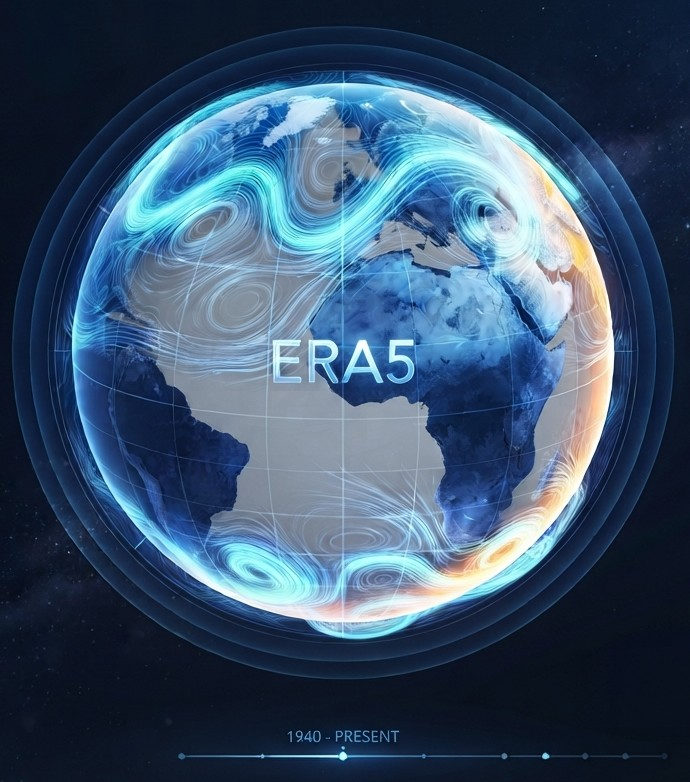
ECMWF's Fifth-Generation Atmospheric Reanalysis
ERA5 is one of the world's most widely used global reanalysis datasets, providing hourly atmospheric, land-surface, and ocean-wave data from 1940 to the present. This guide provides a concise introduction to how ERA5 is produced, the main products and variables available, and its key strengths and limitations.
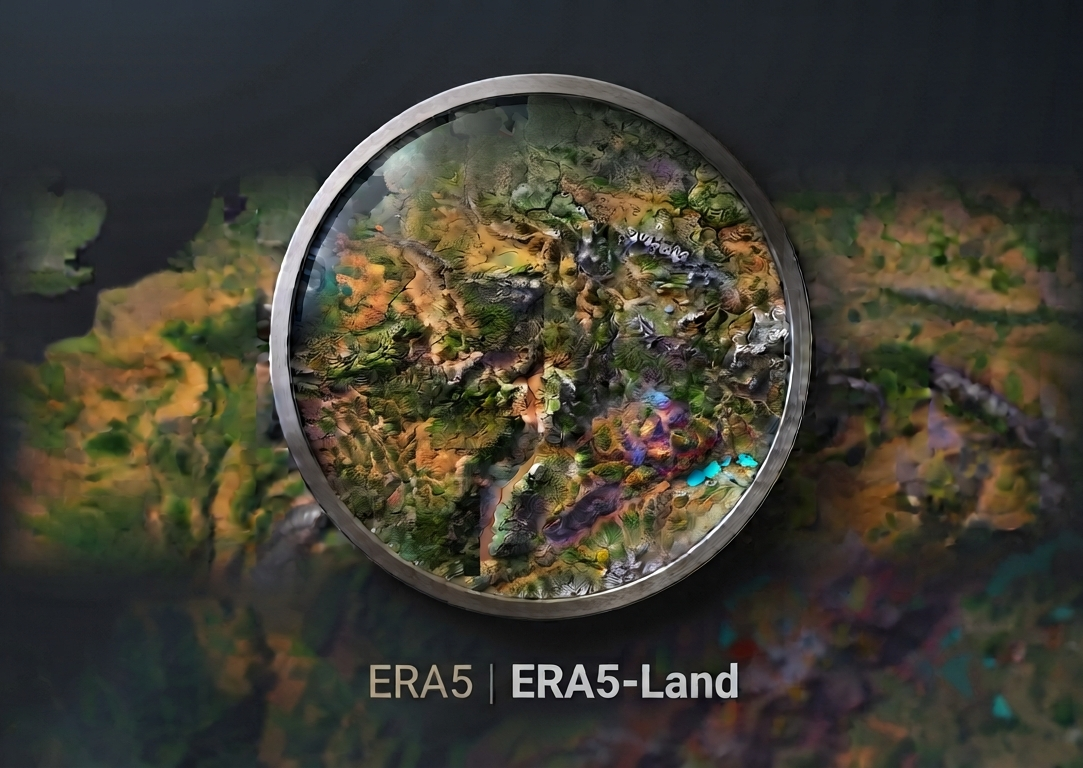
What's the Difference, and Which One Should You Use?
ERA5-Land is a global land-surface reanalysis providing higher-resolution information on soil, snow, water, and energy conditions from 1950 to the present. This guide explains how ERA5-Land relates to ERA5, its main technical characteristics and variables, and when ERA5-Land, ERA5, or both datasets should be used.